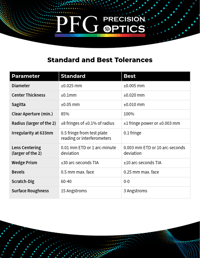
PFG precision prisms are engineered for exceptional angular accuracy and low wavefront error across the demanding defense, aerospace, and semiconductor industries.
PFG’s in-house manufacturing, polishing, metrology, and coating ensure every prism meets precise quality standards, with a wide selection of materials and coatings available.
Precision prisms are used to deviate or reorient light paths in many optical designs, including imaging, targeting, and metrology systems.
While prism designs can introduce challenges for high-volume production, PFG Optics overcomes these barriers through decades of expertise and an extensive tooling library. We deliver scalable solutions with the consistent quality and reliable lead times your application demands.
There's a reason your optical designers and supply chain experts know and trust PFG Precision Optics.
Go from prototypes to high volume without leaving PFG. Our scale is your advantage.
Decades of defense industry experience turns supply chain risk into opportunity
ISO 9001 certification and industry-best on-time delivery and outgoing quality.
With decades of experience in flat optics, PFG Optics supports a wide range of prism configurations. Below are some of the most common types we work with. For specialized or custom requirements, please contact us to explore additional options:
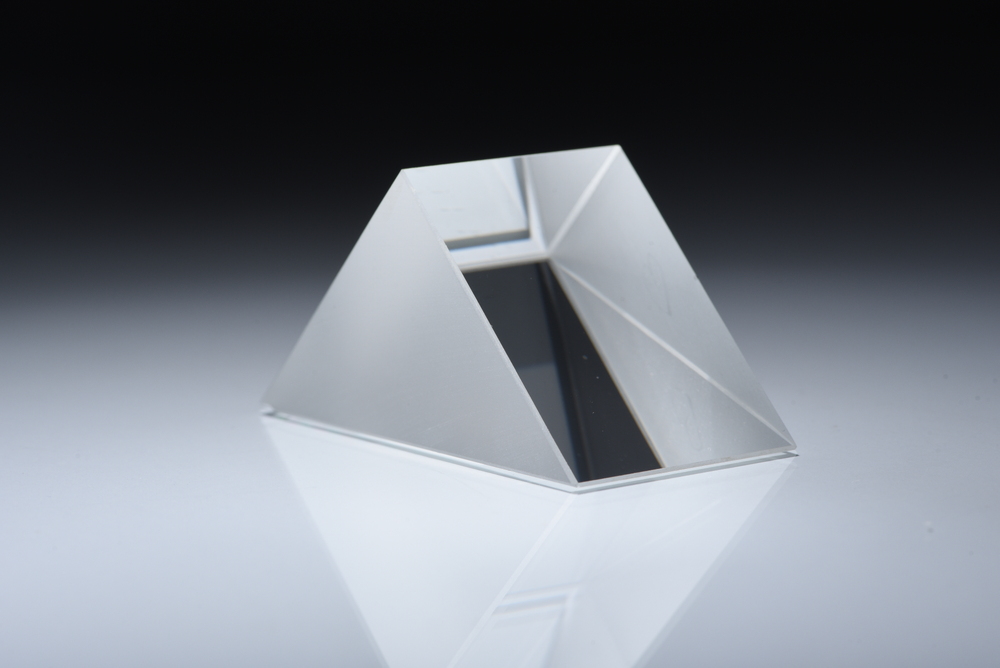
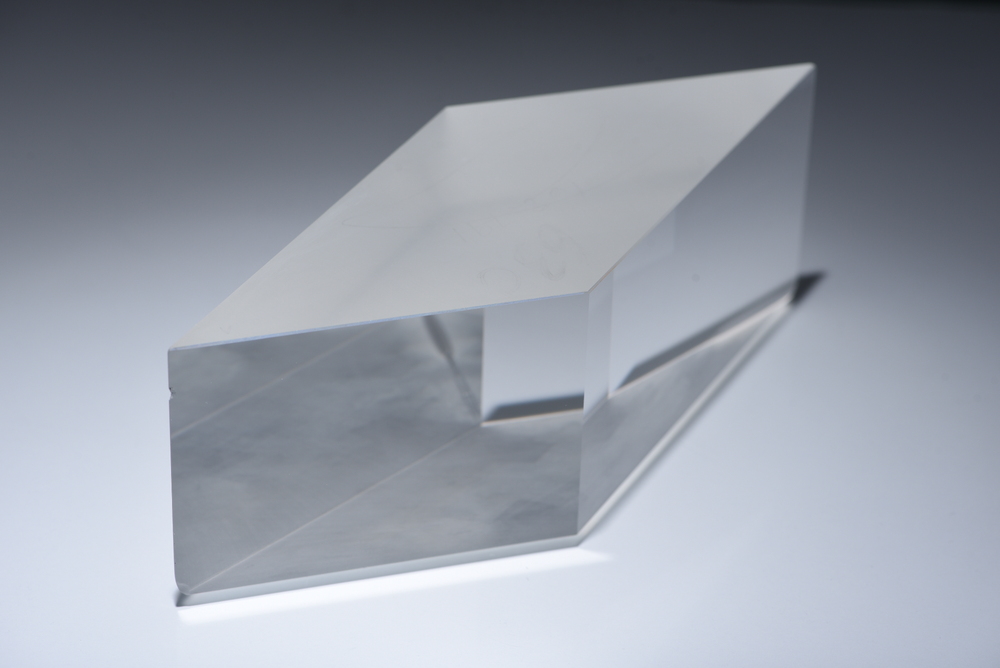
Rhomboid prisms laterally displace a beam without altering angle or image orientation. Rhomboid prisms are very common in beam splitting assemblies or as single elements for image displacement.
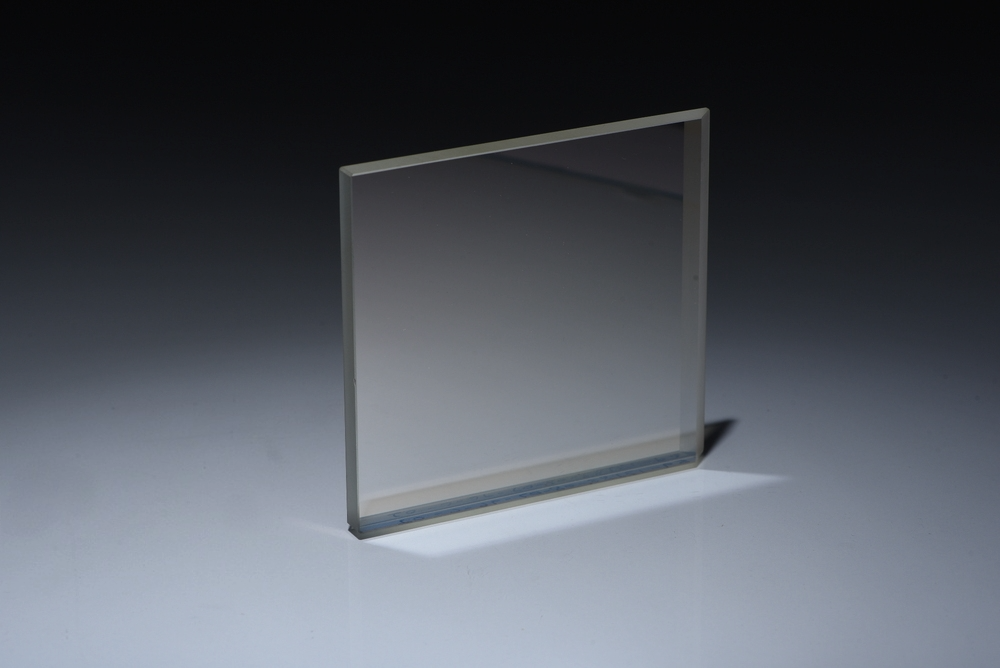
Wedge prisms are used to deviate an input beam along a single axis by refraction through two angled surfaces. Paired together, wedge prisms—known as a Risley Pair—enable precise adjustment of laser beam direction.
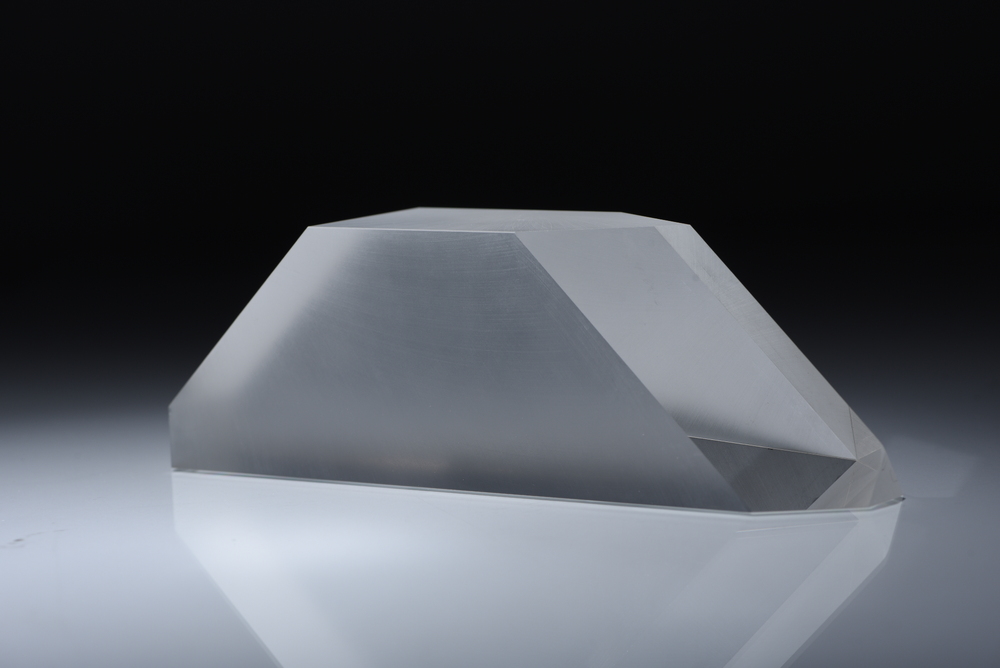
PFG specializes in manufacturing large prisms, setting apart from other flat optics manufactures. Large prisms require equally large metrology, machine tools, and engineering expertise to match, as well as material selection and supply chain.
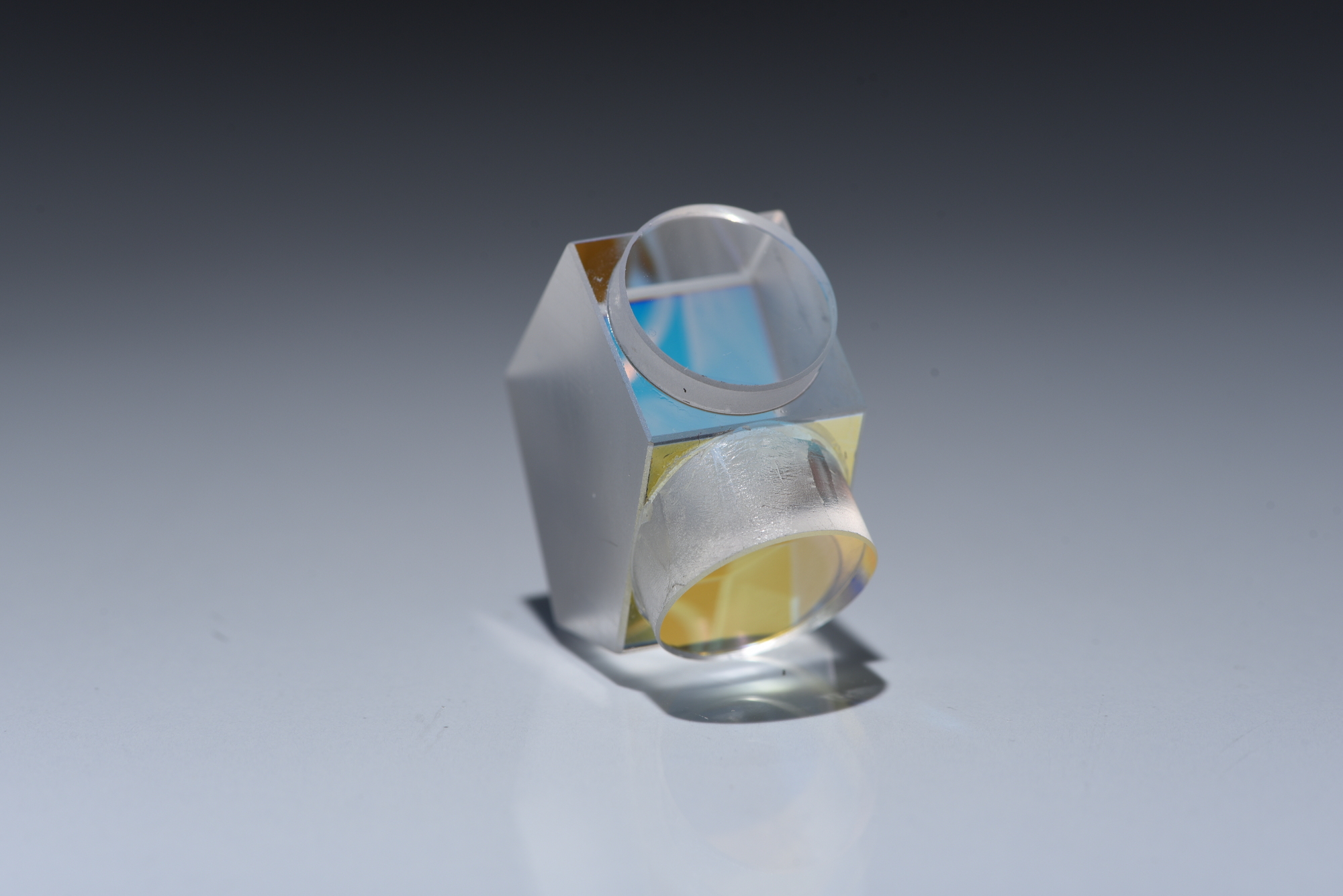
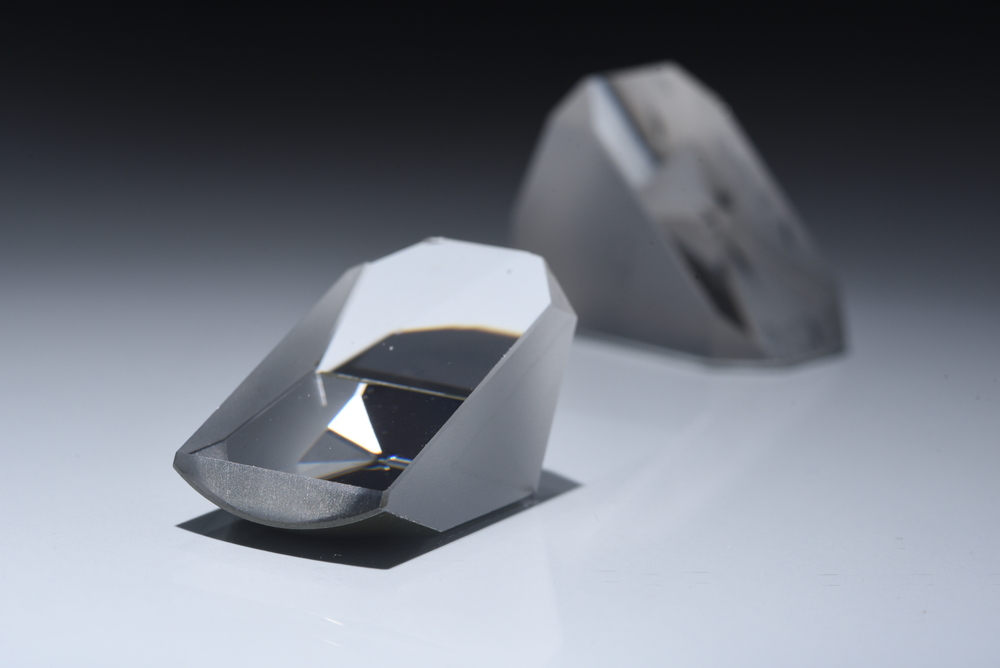
A prism assembly, where two or more prims are face-cemented to each other, forms a compact, monolithic beam steering and/or splitting solution. In addition, cementing eliminates the need to re-align discrete components.
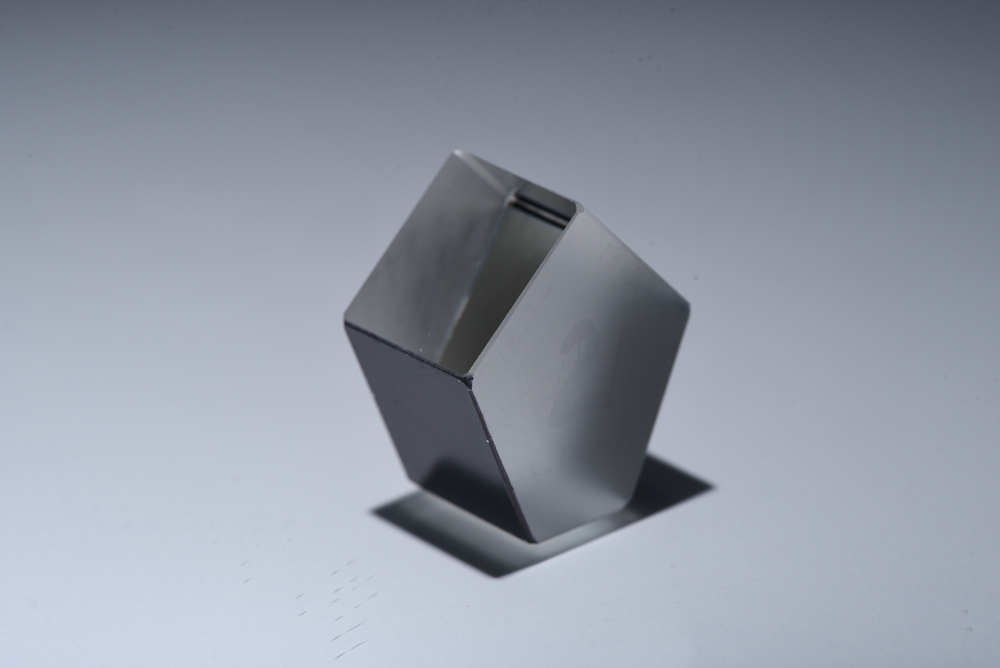
Penta prisms can deviate an input beam 90°, but unlike mirrors or right angle prisms, they are not sensitive to alignment. A variant called a penta-roof prism can deviate an input beam and correct image orientation, making them especially useful in imaging applications.
Ready to take your project to the next level? Contact us to discuss your project.